If you are deciding between an oceanfront home and a near-beach property in Newport Beach, you are not just comparing price points. You are choosing how you want to live by the coast every day, how much maintenance and oversight you are comfortable with, and how much value you place on direct sand access. In a market with very limited inventory and high stakes, a clear side-by-side view can help you make a more confident decision. Let’s dive in.
Newport Beach Coastal Options
In Newport Beach, true oceanfront usually means direct frontage on the sand or ocean. These are often found on first-row shoreline lots, including W Oceanfront and E Oceanfront addresses. The appeal is obvious: immediate beach access, open water views, and a front-row coastal setting.
For this guide, near-beach homes are properties one or two streets off the sand. In Newport Beach, that often includes homes in Balboa Peninsula, Balboa Peninsula Point, Balboa Island, and Corona del Mar Village. These homes can still offer ocean views, rooftop decks, and easy beach access, but they usually deliver a different day-to-day experience.
Why the Choice Matters
This is a scarcity market. Current inventory in both oceanfront and one-block searches is in the single digits, which means buyers are often making decisions from a very small pool of available homes. Newport Beach’s citywide median sale price is $3.44 million, while the 92661 market view shows a median sale price of $5.8 million.
Because these inventory buckets are so small, filtered medians should be treated as directional rather than absolute. In this market, value is often driven by the exact block, lot width, view corridor, and property type. That is especially true when you compare a first-row oceanfront home to a property one or two streets inland.
Oceanfront Lifestyle Benefits
For many buyers, oceanfront living is the purest version of the Newport Beach experience. You step outside and the sand is right there. Your views are typically wider and more immediate, and outdoor spaces can be designed around the coastline.
Current listings help show why this segment commands such a premium. One oceanfront example on W Oceanfront is offered at $27.95 million and includes 100 feet of ocean frontage and a rooftop deck. Another oceanfront property highlighted on W Oceanfront emphasizes a stretch without a boardwalk, which points to a privacy advantage that can matter a great deal in everyday living.
If your top priorities are direct access, visual impact, and long-term legacy ownership, oceanfront tends to stand apart. There is simply no substitute for being on the first row.
Near-Beach Lifestyle Benefits
Near-beach homes often appeal to buyers who want the coast close at hand without making the beach the center of every moment. You are still within easy reach of the sand, but the setting can feel calmer and more private on a daily basis.
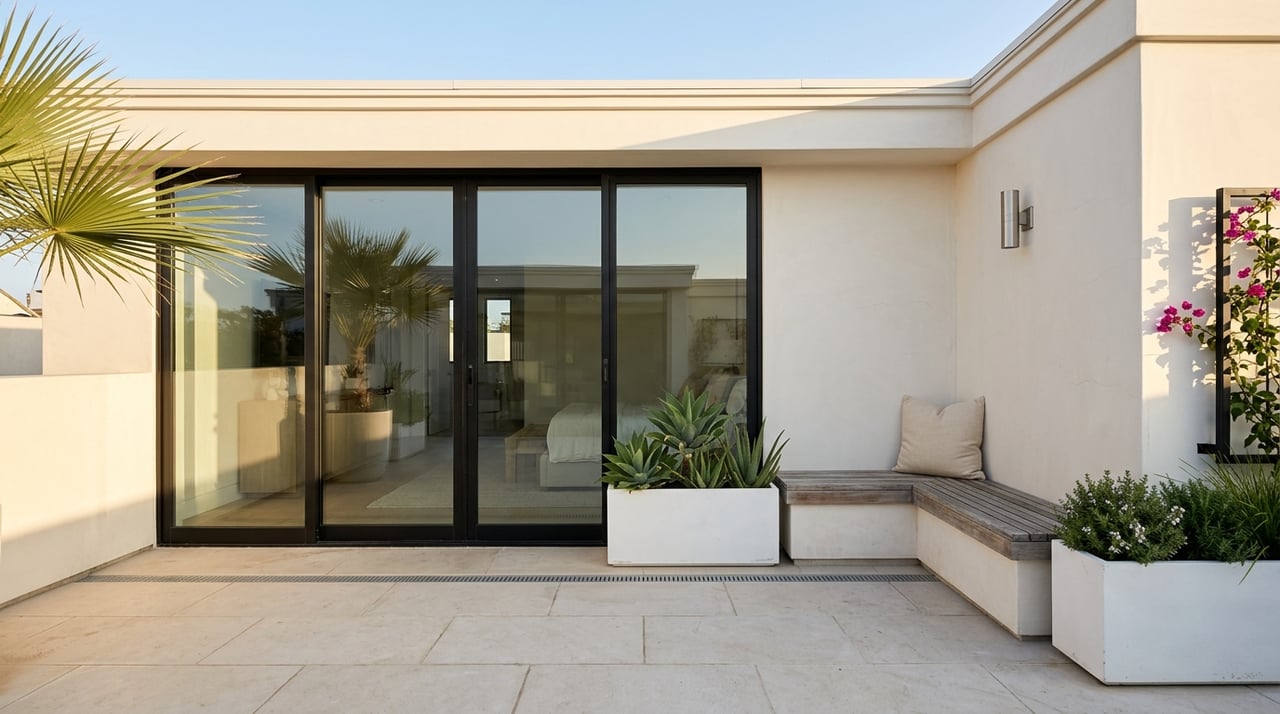
In Newport Beach, one-block examples show how varied this category can be. A home on Jasmine Avenue offers one-block proximity, a rooftop deck, and ocean views. Another property on E Ocean Boulevard is one block from the ocean and a short walk to the bay. A separate near-beach example on E Balboa shows that this category can still fall in the mid-$3 million range.
For many buyers, this balance is the sweet spot. You stay close to the shoreline while often gaining a quieter feel, easier privacy, and more flexibility in budget.
Comparing Price Patterns
Price is one of the clearest dividing lines between these two options. Direct oceanfront homes in Newport Beach reach significantly higher price points than homes one block off the sand, even when the properties are similar in size.
One oceanfront home on W Oceanfront carries an estimated value of $7.63 million, and nearby oceanfront estimates range from about $6.21 million to $13.08 million for similarly sized homes. On the near-beach side, current one-block inventory shows a median listing price of $4.67 million, with active examples at $3.448 million, $4.995 million, $7.98 million, and $9.3 million.
These are not perfect apples-to-apples comparisons, and the sample sizes are very small. Still, the pattern is clear: direct frontage commands a meaningful premium, and exceptional lots can push pricing much higher. The $27.95 million W Oceanfront listing is an outlier, but it also shows how lot width, view quality, and property structure can lift values well above nearby homes.
Maintenance Reality by the Water
The closer you are to the shoreline, the more maintenance tends to matter. Salt spray and onshore winds accelerate corrosion in coastal settings, and that effect is strongest near the water. In practical terms, oceanfront homes usually face more exterior wear than homes a few streets inland.
That does not mean near-beach homes are maintenance-free. It does mean that direct ocean exposure often adds another layer of planning and upkeep. If you prefer a lower-maintenance ownership experience, that difference should be part of your decision.
Flood and Insurance Factors
Flood review becomes more important as you move closer to the water. Newport Beach notes that flood hazard areas are subject to periodic inundation, and high-risk coastal zones can also include additional storm-wave hazard. If a property is in a high-risk zone and the mortgage is federally backed, flood insurance is mandatory.
This matters because a substantial share of Newport Beach is affected by coastal oversight. The city says about 47% of its land area is in the coastal zone, which means many coastal properties come with extra review, planning, or insurance considerations. Before you choose between oceanfront and near-beach, it is wise to understand a specific parcel’s flood zone and insurance implications.
Remodel and Permit Considerations
If you may expand, rebuild, or make major alterations in the future, the permitting side of the decision deserves close attention. Newport Beach states that most development in the coastal zone requires a coastal development permit, although repair and maintenance are generally exempt.
The city also identifies appeal areas that include land between the sea and the first public road, 300 feet from a beach, 100 feet from streams or wetlands, and 300 feet from a coastal bluff. For buyers looking at oceanfront property, or even near-beach homes in tightly regulated areas, this approval layer can shape both timeline and cost.
In other words, a home’s location is not just about views and access. It can also affect what you are allowed to do with the property later.
Rental Income Questions
If seasonal income is part of your strategy, Newport Beach has a clear rule: any residential unit rented for 30 days or less requires a Short Term Lodging Permit. That makes permit status an important detail for both oceanfront and near-beach buyers.
Some oceanfront properties are designed with income use in mind. One current W Oceanfront listing is described as a mixed-use property with three residential units, three short-term lodging permits, and commercial space. That kind of setup can be compelling, but it is better viewed as an exception than the norm.
If rental flexibility matters to you, ask early whether a permit is already in place and how the property is configured. In Newport Beach, that answer can materially affect value and usability.
Which Option Fits You Best
Oceanfront is often the stronger fit if you want the best possible views, immediate sand access, and a trophy-quality coastal setting. It can also suit buyers who see the home as a long-term legacy asset and are comfortable with higher maintenance and more regulatory complexity.
Near-beach may be the better fit if you want to stay very close to the ocean while prioritizing a more private everyday feel and a somewhat more flexible budget. You may still find view opportunities, rooftop living, and easy beach access, but with a different rhythm to daily life.
The right choice usually comes down to a few practical questions:
- Is direct sand access worth the premium to you?
- How much foot traffic or visibility feels comfortable?
- Are you likely to remodel or rebuild?
- Do you want short-term rental income, and is permit status important?
- How much ongoing maintenance do you want to manage?
In Newport Beach, these questions matter more than they do in many inland luxury markets. Coastal permit rules, flood exposure, and lodging-permit requirements all play a bigger role here.
A Strategic Way to Decide
When inventory is limited, it helps to compare homes through both a lifestyle lens and an ownership lens. The lifestyle lens looks at privacy, views, beach access, and how you want the home to feel day to day. The ownership lens looks at maintenance exposure, permit complexity, insurance considerations, and whether the property aligns with your long-term plans.
That is where a tailored, local evaluation becomes especially valuable. In coastal Newport Beach, the difference between one block and first row can be dramatic, not just in price, but in use, upkeep, and future flexibility.
If you are weighing oceanfront against near-beach in Corona del Mar, the Newport Peninsula, or nearby coastal neighborhoods, a private consultation can help you narrow the field and focus on the properties that truly fit your goals. To start that conversation, connect with Julie Grenz.
FAQs
What is considered an oceanfront home in Newport Beach?
- In Newport Beach, oceanfront usually means a home with direct frontage on the sand or ocean, often on first-row shoreline lots such as W Oceanfront or E Oceanfront addresses.
What is considered a near-beach home in Newport Beach?
- In this Newport Beach guide, near-beach refers to homes one or two streets off the sand, including common options in Balboa Peninsula, Balboa Peninsula Point, Balboa Island, and Corona del Mar Village.
Are oceanfront homes in Newport Beach much more expensive?
- Generally, yes. Current market examples show direct oceanfront homes reaching much higher absolute price points than one-block properties, although exact value depends on lot width, views, block, and property type.
Do oceanfront homes in Newport Beach require more maintenance?
- Usually, yes. Homes closer to the shoreline are more exposed to salt spray and onshore winds, which can accelerate exterior wear and corrosion.
Do near-beach homes in Newport Beach still offer ocean views?
- Some do. Current one-block examples in Newport Beach include homes with rooftop decks and ocean views, though the experience is typically less direct than true oceanfront.
Do Newport Beach coastal homes need special permits for remodeling?
- Many do. Newport Beach states that most development in the coastal zone requires a coastal development permit, although repair and maintenance are generally exempt.
Can you use a Newport Beach beach home as a short-term rental?
- You may be able to, but any residential unit rented for 30 days or less requires a Short Term Lodging Permit in Newport Beach.
How do you choose between oceanfront and near-beach in Newport Beach?
- The best choice depends on your priorities around direct beach access, privacy, budget, maintenance, future renovation plans, and whether rental income is part of your strategy.